Buying a PEV in the EU or the US: Certification, VAT, Warranty and Shipping
The same wheel can cost very different amounts in the EU and in the US, and the price tag is the smallest part of the difference. Safety labels, VAT, warranty rights, speed limits and the rules for shipping lithium batteries all change with the border. This guide sets out what we could confirm in official and trade sources, and where we could not.
We did not buy or import anything for this article. Several points rest on a single source and are marked as such. This is not legal or customs advice.
At a glance
| Topic | Bought from an EU seller | Bought from a US seller and imported |
|---|---|---|
| Safety label | CE mark; EN 17128 is the standard for personal light electric vehicles | UL 2272 (EUCs and scooters), UL 2849 (e-bikes), UL 2271 (batteries); voluntary at federal level |
| Price shown | Includes VAT | Excludes sales tax; you add import VAT, duty and freight |
| Guarantee | 2-year legal guarantee against the seller | Not automatic with a non-EU seller |
| Speed | EU versions are often limited to 25 km/h | US versions are often faster |
| Shipping | Inside the EU, no customs | Lithium battery rules apply; carriers may refuse air freight |
Safety labels: CE and UL are different things
In the EU the relevant standard is EN 17128:2020, which covers the safety and electromagnetic compatibility of personal light electric vehicles and sets a maximum of 25 km/h. The industry body ACEM asked in a 2021 position paper to revise it and make it mandatory by bringing these vehicles under the Machinery Directive, so a CE mark on an EUC is not proof of an independent test. ACEM also notes a high number of recalls for e-scooters, hoverboards and monowheels in 2019.
Since 13 December 2024 the General Product Safety Regulation (2023/988) applies. For products not covered by other EU harmonisation rules it requires a technical file, a risk assessment and an EU responsible person where the manufacturer is not based in the EU, and online listings must show the manufacturer and responsible person details. The source we read does not say how this applies to a seller outside the EU, so treat it as a reason to check the listing, not as a guarantee.
In the US, UL 2272 covers the electrical system of e-scooters, hoverboards and EUCs, UL 2849 covers e-bike systems and UL 2271 covers battery packs. None of them is required by federal law. New York City wrote the three standards into local law in 2023. The Consumer Product Safety Commission published a proposed rule on 24 June 2026 that would make modified versions of UL 2849-20, UL 2272-24 and UL 2271-23 mandatory nationwide, with comments due on 24 August 2026 and a start date 180 days after a final rule. It is still a proposal.
Fake labels are a real problem. On 7 July a federal judge permanently barred sellers of two brands from using fake UL marks on e-bikes and e-scooters. Freshly Charged advises searching UL's Product iQ registry and says "UL certified" or "UL listed" means tested, while "UL compliant", "built to UL standards" or "UL pending" do not.
Speed and power: the same wheel is not the same product
Many models come in two versions. The NAVEE NT5 Max sold in the EU is limited to 25 km/h with factory modes of 15, 20 and 25 km/h and is rated at 700 W, while the US version is rated at 800 W with a claimed 31 mph. The EU Segway Ninebot Max G3 is limited to 25 km/h, while the tested US version reached 28 mph. The OneRide listing for the KingSong S22 Pro quotes 70 km/h on private land and 25 km/h on public roads.
The reason is the law. ACEM's paper describes vehicles above 25 km/h or 250 W as a matter for the EU type-approval regulation 168/2013, the L-category system we explain in our L1e article. A US wheel with a 60 mph claim, such as the Lynx S, is off-road equipment on most EU roads, and national limits such as Italy's 0.50 kW cap for scooters add to that. Always ask which version you are buying.
VAT, duty and the real price
EU shop prices include VAT; the OneRide listing for the S22 Pro shows €2,899 with VAT and €2,395.87 without, which is 21%. US prices exclude sales tax. When you import, the customs authority works it out like this, according to Irish Revenue: duty is calculated on the goods plus transport and insurance, and VAT on that value plus any duty, at the rate of your own country.
Here is an illustration with round numbers, not a quote. The wheel costs €3,000 and freight €300, so the customs value is €3,300. VAT is 21% in this example, and the duty is 0% or 6%.
| 0% duty | 6% duty | |
|---|---|---|
| Customs value | €3,300 | €3,300 |
| Duty | €0 | €198 |
| VAT at 21% | €693 | €734.58 |
| Total | €3,993 | €4,232.58 |
The duty rate is the unknown. The tariff page we found shows a range of 0 to 6% for the group 8711 60 (vehicles with an electric motor) but does not list unicycles or kick scooters, so check the TARIC database for your exact product.
Do not rely on the new €3 duty. Since 1 July 2026 the €150 exemption has been abolished and a flat €3 per item applies to parcels worth €150 or less, which is not a wheel or a scooter. A wheel follows the normal calculation above. Bird & Bird adds that an EU-wide customs handling fee is planned from November 2026, with no amount given. Some sellers collect VAT at checkout through the Import One Stop Shop, and then no further import VAT is due; otherwise the courier asks you to pay before delivery.
Warranty: where you stand
Under EU rules a seller must repair or replace a defective product free of charge for 2 years from delivery. If the defect appears in the first year, the law presumes it was there at delivery, and some countries extend that to 2 years. A manufacturer's guarantee is optional and does not replace this right. The catch is that, according to the European Commission, the 2-year guarantee covers purchases from sellers in the EU, and rights against a non-EU website are not automatic. An EU-store listing can state it plainly: OneRide lists a 2-year EU warranty for the S22 Pro.
Before buying abroad, ask in writing whether the seller honours the warranty in your country, who pays shipping both ways and where the repair happens. We could not read the ewheels shipping policy, so we cannot say what any US retailer promises.
Shipping a battery
Lithium batteries are dangerous goods. A battery shipped inside a vehicle is classed as UN 3481, and a pack above 100 Wh falls under the stricter Section I rules. For air freight that means cargo aircraft only, a full dangerous goods declaration, special packaging and carrier approval; surface transport follows lighter rules, according to Goods Across Borders. Our arithmetic: the wheels in our reviews carry 597 Wh to 2,700 Wh, so all of them are above 100 Wh. Ask the seller which carrier and mode will be used.
Price pairs from our reviews
| Model | US listing | EU listing |
|---|---|---|
| Leaperkim Lynx S | $3,699 (ewheels) | €2,799 including VAT (e-rides) |
| KingSong S22 Pro | $2,449, sold out when we looked (KingSong US) | €2,899 including VAT (OneRide) |
| NAVEE NT5 Max | $849.99 sale (NAVEE US) | €699 (NAVEE EU) |
| Segway Ninebot Max G3 | $999.99 (eRideHero) | €899 in the Netherlands, €799 in Germany |
We did not convert currencies. The versions differ (the EU NT5 Max and Max G3 are speed-limited), and US prices exclude sales tax. An importer pays VAT and freight on top of the US figure, so a US price has to be lower by more than that to be worth it.
Checklist before you pay
- Ask for the exact version and its speed limit on public roads.
- Verify any UL claim in UL's Product iQ registry; "UL compliant" is not "UL listed".
- Ask who pays duty and VAT, and get the total in writing.
- Ask whether the warranty is honoured in your country and where repairs are done.
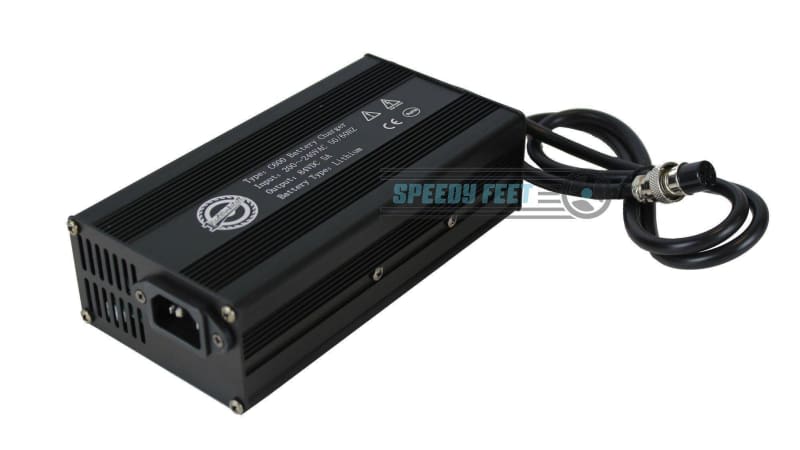
- Check the charger's input voltage range and plug type.
- Ask which carrier and mode will ship the battery.
- For a non-EU seller, look for the manufacturer and an EU contact in the listing.
What we could not confirm
- The duty rate for unicycles and scooters in the EU tariff.
- The European Commission's own customs page, which we could not read, so the VAT and duty rules come from the Irish and Maltese customs authorities.
- The amount of the planned EU handling fee.
- How the product safety regulation applies to a non-EU seller; the source describes manufacturers outside the EU.
- Any US retailer's international shipping and warranty terms.
- The CPSC rule is a proposal, not a final rule.
PEV Deals is a deals site and does not sell wheels or scooters. Treat all prices as an orientation and open the offer before you rely on a number.
Sources: ACEM (position paper on micromobility, 2021); European Commission (guarantees FAQ); Irish Revenue and Malta Customs (buying online outside the EU, €3 duty); Bird & Bird (EU customs reform 2026); Cooley (General Product Safety Regulation); Freshly Charged (UL standards guide); Beveridge & Diamond (CPSC proposed rule); Goods Across Borders (shipping lithium batteries); celna24 (tariff 8711); OneRide, ewheels, e-rides, NAVEE, KingSong and eRideHero listings.