Electric Personal Transportation: EUC vs Electric Scooter vs Onewheel vs E-Bike and More
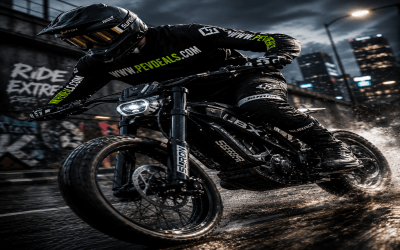
Personal electric transportation has changed dramatically in recent years. What used to mean an electric bicycle or a basic electric scooter now includes electric unicycles (EUCs), electric scooters, Onewheels, electric skateboards, e-bikes, electric mopeds, and a few less common categories like electric tricycles.
Each type trades off speed, range, portability, comfort, stability, and learning difficulty differently — there's no single "best" one. The right choice depends on what you actually want to do with it: commute to work, travel long distances, carry the vehicle onto a train or into an office, explore the city, or simply have fun.
This guide compares the main categories so you can match a vehicle to how you'll actually use it.
Quick Comparison
| Vehicle | Portability | Comfort | Range | Stability | Learning |
|---|---|---|---|---|---|
| EUC | Excellent | Medium | Excellent | Medium | Hard |
| Electric Scooter | Good | Medium | Good | High | Easy |
| Onewheel | Excellent | Medium | Medium | Medium | Hard |
| Electric Skateboard | Excellent | Low | Medium | Low | Medium |
| E-bike | Low | Excellent | Excellent | Very High | Very easy |
| Electric Moped | Very low | Excellent | Excellent | Very High | Easy |
| Electric Tricycle | Very low | High | Good | Very High | Very easy |
Individual models can differ a lot from these general ratings — a compact commuter e-bike and a long-range cargo e-bike sit at opposite ends of the "portability" row, for example.
The Main Vehicle Types
Electric unicycle (EUC). A self-balancing single-wheel vehicle: lean forward to accelerate, lean back to brake, shift your weight to turn. No handlebars, so your hands stay free.
- Best for: riders who value portability and range above all else, and multimodal commuting — ride to a station, roll the wheel onto a train, ride again at the other end.
- Watch out for: a real learning curve before you can ride confidently, and more consequential falls since there's no seat or handlebar to catch you.
Electric scooter. Handlebars, two wheels, a standing platform — the most familiar and widely recognized format.
- Best for: beginners and short-to-medium urban commutes; most models fold down for storage or carrying indoors.
- Watch out for: small wheels that make potholes and rough pavement more noticeable, and long-range models can get surprisingly heavy.
Onewheel. A self-balancing board with one large central wheel, controlled the same way as an EUC — it feels closer to snowboarding or surfing than to transportation.
- Best for: recreation, trail riding, and riders who want maximum fun over maximum practicality.
- Watch out for: the same learning curve as an EUC, plus more limited range than a large EUC or e-bike.
Electric skateboard. A familiar skateboard or longboard platform with a motor, usually controlled by a handheld remote rather than by leaning.
- Best for: people who already skate and want a compact, low-profile way to get around.
- Watch out for: small wheels and light suspension make it the least stable option here, and you're dependent on the remote rather than riding hands-free.
E-bike. A regular bicycle with an electric motor — for most people, the most practical all-around option.
- Best for: daily commuting, longer distances, families, and cargo; large wheels handle rough pavement well, and pedal assist still gives you exercise.
- Watch out for: size and weight — it's the hardest of these to carry upstairs, store in a small apartment, or take onto crowded public transport.
Electric moped / small e-motorcycle. Bigger wheels, a proper seat, suspension, and significantly more power than an e-bike.
- Best for: longer, faster trips where comfort matters and portability doesn't.
- Watch out for: weight, storage, and — depending on your country's vehicle classification — possible registration, insurance, or licensing requirements.
Electric tricycle and small enclosed vehicles. A third wheel (or, at the far end, a small enclosed cabin) trades compactness for stability and cargo space.
- Best for: riders who have trouble balancing on two wheels, grocery runs, and — for enclosed models — weather protection in colder climates.
- Watch out for: these are the largest, heaviest, and least portable vehicles on this list, closer to a small car than to a bicycle.
Head-to-Head: EUC vs Scooter vs Onewheel vs E-Bike
| Feature | EUC | Scooter | Onewheel | E-bike |
|---|---|---|---|---|
| Learning | Hard | Easy | Hard | Very easy |
| Portability | Excellent | Good | Excellent | Poor |
| Comfort | Medium | Medium | Medium | Excellent |
| Long distance | Excellent | Good | Medium | Excellent |
| Cargo | Poor | Poor | Poor | Excellent |
| Hands-free riding | Yes | No | Yes | No |
| Beginner friendly | No | Yes | No | Yes |
Quick Picks
- Want maximum portability? EUC, then electric skateboard, then Onewheel, then a folding scooter. A large EUC is still compact, but "portable" doesn't always mean "light."
- Want maximum comfort? Electric moped first, then e-bike — large wheels, suspension, and a proper seat beat anything you stand on.
- Commuting 10-30 km? E-bike or EUC. The e-bike wins on comfort, cargo, and rough roads; the EUC wins on portability and multimodal trips (train plus ride).
- Total beginner? E-bike first, since it feels like a regular bicycle, then an electric scooter for its familiar handlebar control. EUCs, Onewheels, and skateboards all need real practice before you'll feel confident.
- Want maximum fun? EUC, Onewheel, and electric skateboard are the most engaging — they reward learning a physical skill rather than just getting you from A to B.
- Need cargo or extra stability? A cargo e-bike or an electric tricycle, depending on how much you need to carry and how much balance you're comfortable with.
- Replacing a car outright? Short urban trips call for an EUC or scooter; kids or groceries call for a cargo e-bike; longer, faster trips call for an electric moped.
Two trade-offs sit behind almost every choice above. The first is portability versus comfort: the more compact a vehicle gets, the more it usually asks of your balance and gives up in ride quality. The second is skill versus convenience — self-balancing vehicles (EUC, Onewheel) put you inside the control loop, which takes practice but rewards you with an unusually direct, natural feel once you've learned it, while traditional formats (scooter, e-bike, moped) are designed to be ridable from day one.
Conclusion
There's no universal winner here. Each vehicle solves a different problem, and the best one depends on your priorities:
Want maximum portability? Choose an EUC.
Want simplicity? Choose a scooter.
Want comfort and practicality? Choose an e-bike.
Want maximum fun? Try an EUC, Onewheel, or electric skateboard.
Want speed and comfort over long distances? Consider an electric moped.
Want to carry people or cargo? Choose an e-bike or electric tricycle.
The future of urban transportation probably isn't one type of vehicle winning outright — it's people combining several: walking, e-bikes, scooters, EUCs, and public transport, each covering the leg of the trip it's actually good at.