Italy E-Scooter Rules 2026: Plates, Insurance, Helmets and Fines
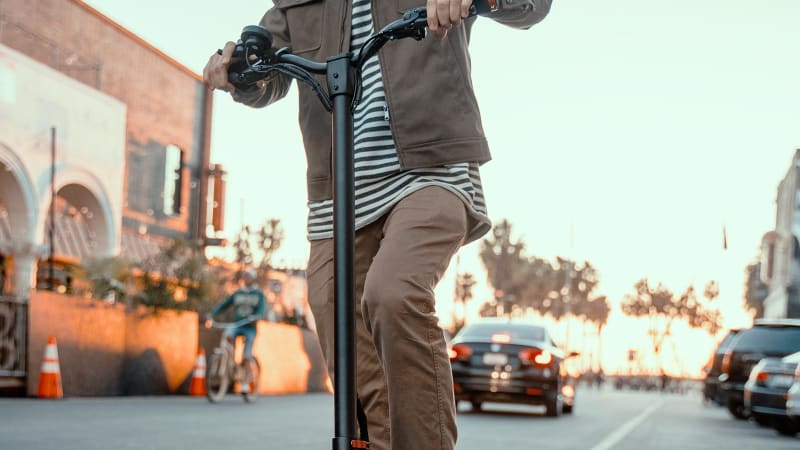
Italy has spent two years tightening the rules for electric scooters. Law 177/2024 (published in the Gazzetta Ufficiale on 29 November 2024) made helmets compulsory for everyone, and added two obligations that only became enforceable in 2026: an identification plate and third-party insurance. If you live in Italy, ride there on holiday or plan to buy a scooter for an Italian address, this is what the text of the law actually says, and where the sources we read disagree.
The short version
| Rule | What applies in 2026 |
|---|---|
| Plate (contrassegno) | Mandatory since mid-May 2026 (ACI gives 16 May). €8.66, linked to the owner |
| Insurance | Third-party liability (RC) mandatory since 16 July 2026 |
| Helmet | Mandatory for every rider, UNI EN 1078 or UNI EN 1080 |
| Where | Urban roads with a limit of 50 km/h or less; never on the pavement |
| Speed | 20 km/h on roads, 6 km/h in pedestrian areas (ACI summary) |
| Minimum age | 14 |
This is general information, not legal advice. We are a deals site, not a shop and not a law firm: check with ACI, the Polizia Locale of your city or a lawyer before you act.
What counts as an e-scooter
The rules above apply to a monopattino a propulsione prevalentemente elettrica. Under Law 160/2019, art. 1, comma 75, that means:
- a continuous nominal motor power of 0.50 kW or less
- no seat
- an audible signal (horn) and a speed regulator that can be set to the legal limits
- CE marking under the Machinery Directive 2006/42/EC
A scooter that does not meet these requirements may not circulate at all, and riding it is fined at €200 to €800 (comma 75-undevicies). In practice this puts most dual-motor performance scooters off the public road in Italy, whatever their "street mode" settings say.
The plate: contrassegno
The contrassegno is an adhesive, plasticised, non-removable sticker printed by the Istituto Poligrafico e Zecca dello Stato (comma 75-vicies quater). Details from ACI:
- Cost: €8.66, paid through PagoPA.
- Where: ACI offices, motor-vehicle agencies, or online through the Portale dell'Automobilista with SPID or the electronic identity card (CIE).
- It is linked to the owner, not to the frame, in the national vehicle archive. If you move house you must report it, and if you sell, the buyer asks for a new one.
- It must be visible: on the rear mudguard or the front of the steering column.
- It can be transferred to a replacement scooter.
Riding without it, or with one that is hidden, altered or forged, is fined at €100 to €400.
Insurance
Since 16 July 2026 an e-scooter cannot be put into circulation without civil-liability insurance towards third parties (comma 75-vicies quinquies, with Title X of the Insurance Code). The start was pushed back about two months from the original May date, to let the transport ministry and the insurers' databases exchange data.
- The policy must be specific to the scooter and show its plate code. A generic household liability policy is not enough, according to Facile.it.
- ACI quotes a typical €25 to €150 a year, depending on extras. Assoutenti, quoted by Facile.it, says €35 to €55 for a basic policy.
- Shared scooters are already insured by the operators, so this mostly hits private owners.
- Riding uninsured carries the same €100 to €400 fine as riding without a plate, on top of personal liability for any damage you cause.
Helmet, age and night riding
The helmet duty used to cover minors only. Since the 2024 reform it covers every rider (comma 75-novies) and the helmet must meet UNI EN 1078 or UNI EN 1080. ACI lists a minimum age of 14. At night, from half an hour after sunset, front and rear lights are required, plus a high-visibility vest or reflective straps. No passengers, no animals or objects, no towing.
Where you can ride
- Only on urban roads with a speed limit of 50 km/h or less (comma 75-terdecies). Extra-urban roads and faster urban roads are out.
- Not on the pavement. There you may only push the scooter by hand. Riding the wrong way is also banned.
- Parking on the pavement is banned too, unless the municipality has marked a dedicated area.
- Otherwise the scooter is treated like a bicycle (comma 75-quinquies).
- Private land closed to traffic is outside the rules: the law counts only areas covered by the Highway Code as "in circulation".
What about electric unicycles?
This is the part most PEV riders care about, and it is not good news. Electric unicycles (EUCs) are not scooters in Italian law. They fall into the category "other micromobility devices", which art. 14, comma 2 of Law 177/2024 handles separately:
- Anyone riding a device that does not match the technical characteristics set by the transport ministry decree, or rides outside the area of experimentation defined in that decree, faces a fine of €200 to €800.
- If the device has a petrol engine or an electric motor above 1 kW of continuous nominal power, it is confiscated.
The decree is the MIT decree of 4 June 2019 (Gazzetta Ufficiale n. 162, 12 July 2019). It names four device types, including the monowheel, and says that:
- the experiment exists only in municipalities that authorise it by a council resolution, and only in urban areas;
- for a monowheel, its table allows pedestrian areas only, with a speed limiter set to 6 km/h or less, and not on cycle lanes or in 30 km/h zones;
- riders must be adults, or hold at least an AM licence if under 18; no passengers, no towing; lights and CE marking are required.
Our reading, which a lawyer or the local police should confirm: an EUC is not legal on ordinary Italian roads, and at best it is allowed at walking pace in pedestrian areas of a city that has opted in. Most mid-range and flagship wheels are far above 1 kW (an InMotion V13 is rated at 4,500 W), so the confiscation risk is real. We did not trace how the decree's own 12- and 24-month time limits were later extended, so check the status in the city where you ride.
Visitors and renters
The law speaks of "owners" and does not distinguish foreign visitors. We found no official guidance on whether a scooter registered abroad needs the Italian plate. If you are travelling with your own, ask ACI or the Polizia Locale first. Rental and sharing scooters are the operators' responsibility.
Where the sources disagree
- Plate start: ACI says 16 May 2026, some outlets say 17 May.
- Insurance start: 16 July 2026 in ACI, Facile.it and others, 17 July in one article.
- Insurance fine: the law text gives €100 to €400 (as for the plate). One outlet quotes €866 to €3,464 with seizure of the scooter, and a headline mentions up to €800; we could not reconcile either with the law text.
- Fines for no helmet, a passenger or riding where banned: reported as €50 to €250 by a secondary source. We did not verify them in the law text, and we found no verified figure for phone use.
Sources: Legge 25 novembre 2024, n. 177, art. 14 (Gazzetta Ufficiale, 29 November 2024); Decreto MIT 4 giugno 2019 (Gazzetta Ufficiale n. 162, 12 July 2019); ACI, aci.gov.it and lautomobile.aci.it; Facile.it; ildiritto.it; diritto.it.