When Public Transport Gets Shaky in Europe: Is an E-Scooter Plan B?
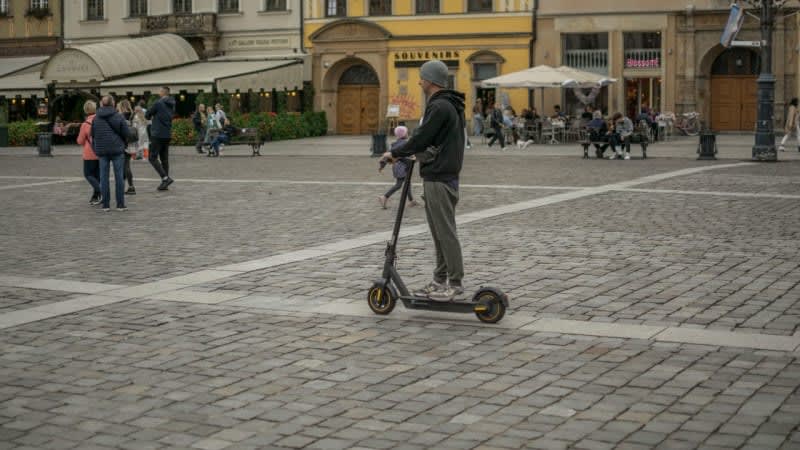
Vilnius is handing part of its bus network to private carriers, Irish fares jump 15% and Poland has lost 300,000 km of bus lines in five years. Public transport in Europe is under pressure in very different ways, and some commuters ask whether an electric scooter is a sensible Plan B.
This guide separates what is documented from what is feared. In Vilnius the official plan actually adds service, so we say so, and then we run the numbers on an e-scooter against a monthly pass. Prices and rules change, so check each link before you decide.
What Is Happening in Vilnius
The city is not selling its bus operator. It is tendering extra bus mileage to private carriers, and the municipal company Susisiekimo paslaugos (brand "Judu") runs the process. Here is what the sources say:
- Scope: LRT reported on 28 September 2026 that the tender has four lots. Vlasava won lots 1 and 2, and Toks won lots 3 and 4. The mayor says private carriers will add 327 new electric buses, taking the fleet from about 600 to 824 buses and trolleybuses.
- Promised service: annual mileage would grow from 46 to 67 million km (+30%), with buses every 6–10 minutes in the centre and every 15 minutes in outer areas. Those are the mayor's targets, not delivered results.
- Municipal operator stays: in 2023 the council approved moving some routes to private carriers, and the city said its own operator would keep 39 routes (TV3, 29 March 2023).
- Delays: the tender has been suspended twice and challenged in court. The Court of Appeal ruled on 14 May 2026 that continuing it serves residents' need for uninterrupted transport (TV3, 17 May 2026). The excluded bidder Kautra argued that signing with the winners would cost about €7.6 million more than its own offer.
- Timing: contracts were still unsigned in late September. New carriers and buses are expected in early 2027 at the latest.
So the real risk is the handover period and the court fight, not a documented cut in service. We found no source that reports a planned fare rise tied to the tender. Fares did rise before it: in 2025 the 30-minute ticket went from €0.65 to €1.00 and the 60-minute ticket from €0.90 to €1.25, according to LRT and its follow-up on the council vote.
Similar Pressure Elsewhere in Europe
| Country | What Is Documented | Source |
|---|---|---|
| Ireland | Bus and rail fares rise by an average of 15%; the 90-minute city fare goes from €2.00 to €2.30 from early next year. First increase since 2018. | Irish Times, 3 September 2026 |
| Germany | Deutschlandticket rose from €58 to €63 in January 2026. Operators lose about €3 billion a year on it, and a cost index could raise prices from 2027. | WirtschaftsWoche |
| Poland | About 300,000 km of bus lines disappeared in five years, and about 15 million people face transport exclusion, according to figures the article cites. | Infor.pl, 8 July 2026 |
| Lithuania | Reduced VAT on passenger transport rose from 9% to 12% on 1 January 2026, which pushes up ticket prices such as suburban buses around Vilnius. | Pedal.lt |
These are different problems. Ireland and Germany show fares catching up with costs, Poland shows missing rural service, and Vilnius shows a tender in transition. The Polish article also quotes a seller of light electric vehicles, so read its commentary as promotional; the figures it cites come from other organisations.
E-Scooter Against a Monthly Pass
We take a 10 km commute each way on 22 days, so 440 km a month. Using our energy assumptions for light electric vehicles, an e-scooter uses about 1.8 kWh per 100 km, so roughly 7.9 kWh a month. The scooter is a Segway Ninebot Max G3 at €899; a German retailer lists it at €799.
| Case | Monthly Pass | Energy | Insurance | Payback |
|---|---|---|---|---|
| Germany | €63 | €2.87 (€0.362/kWh) | €3.75 (plate from about €45 a year) | 16 months |
| Vilnius, pass at €29 | €29 | €1.71 (€0.216/kWh) | none confirmed | 33 months |
| Vilnius, pass at €38 | €38 | €1.71 | none confirmed | 25 months |
Payback is the scooter price divided by the monthly pass minus running costs. It ignores tires, repairs, theft, battery wear and resale value, and it assumes you stop buying the pass.
Read the table honestly: where a pass is cheap and covers the whole country, as in Germany, a scooter takes over a year to pay off. Where the pass is €29, as it was in Vilnius before the 2025 changes, it takes nearly three years. The €38 figure was only a March 2025 proposal in LRT's report, so check the current pass price before you rely on any of this.
Where Home Solar Fits
An e-scooter that burns 7.9 kWh a month is a rounding error for a household. A €200 plug-in panel can cover it. According to Euronews, Germany passed one million plug-in systems between 2022 and 2025, small balcony panels cost about €200 and plug-in solar is legal in every EU state except Sweden and Hungary.
Do not read that as an unstoppable boom, though. SolarPower Europe's mid-year update puts EU installations at 69.6 GW in 2025 and forecasts 68.1 GW for 2026, with rooftop share slipping to 44% because residential demand is weaker. Solar makes charging nearly free; it does not decide whether the scooter makes sense.
What Limits the Scooter
- Legal status: rules differ sharply. Germany requires an insurance plate, Spain a registration label, the Netherlands only approved models, and the UK bans private scooters on public roads. See our country-by-country e-scooter guide.
- Range: the Max G3 managed about 40 km in eRideHero's regular-mode test against a claimed 80 km, so a 20 km round trip fits, but a 40 km one does not.
- Weight: about 24 kg is fine in an elevator and tiring on stairs or a bus.
- Weather and winter: rain, ice and cold batteries cut range and comfort. Many riders keep a transit pass for those days.
- Safety: Germany counted 38 e-scooter deaths in 2025. Helmets are required for everyone in Lithuania from 2026.
Verdict
A scooter is a reasonable second option, not a replacement for transit, and the money case is strongest where fares keep rising or service thins out. In Vilnius, the documented risk is a messy handover and court delays, while the promised result is more service. Wait for the contracts and real timetables before dropping your pass, and buy a scooter only if the route, the legal rules and the payback make sense for you.
Sources
- LRT: Vilnius tender, contracts and court disputes (28 September 2026)
- TV3: Court of Appeal ruling on the Vilnius tender (17 May 2026)
- TV3: Vilnius routes to private carriers (29 March 2023)
- LRT: Vilnius plans major expansion in public transport (27 March 2024)
- LRT: Vilnius ticket prices (31 March 2025)
- LRT: Vilnius council vote on tickets (9 April 2025)
- Judu: Vilnius ticket prices
- Pedal.lt: VAT change and suburban bus fares
- Irish Times: fare increases (3 September 2026)
- WirtschaftsWoche: Deutschlandticket 2026
- Infor.pl: transport exclusion in Poland (8 July 2026)
- Euronews: plug-in solar in Europe (7 April 2026)
- TaiyangNews: SolarPower Europe mid-year update (8 September 2026)
- PEV Deals: Segway Ninebot Max G3 review
- PEV Deals: e-scooter rules in Europe